Bank of Canada Rate Increase: What It Means for Your Mortgage
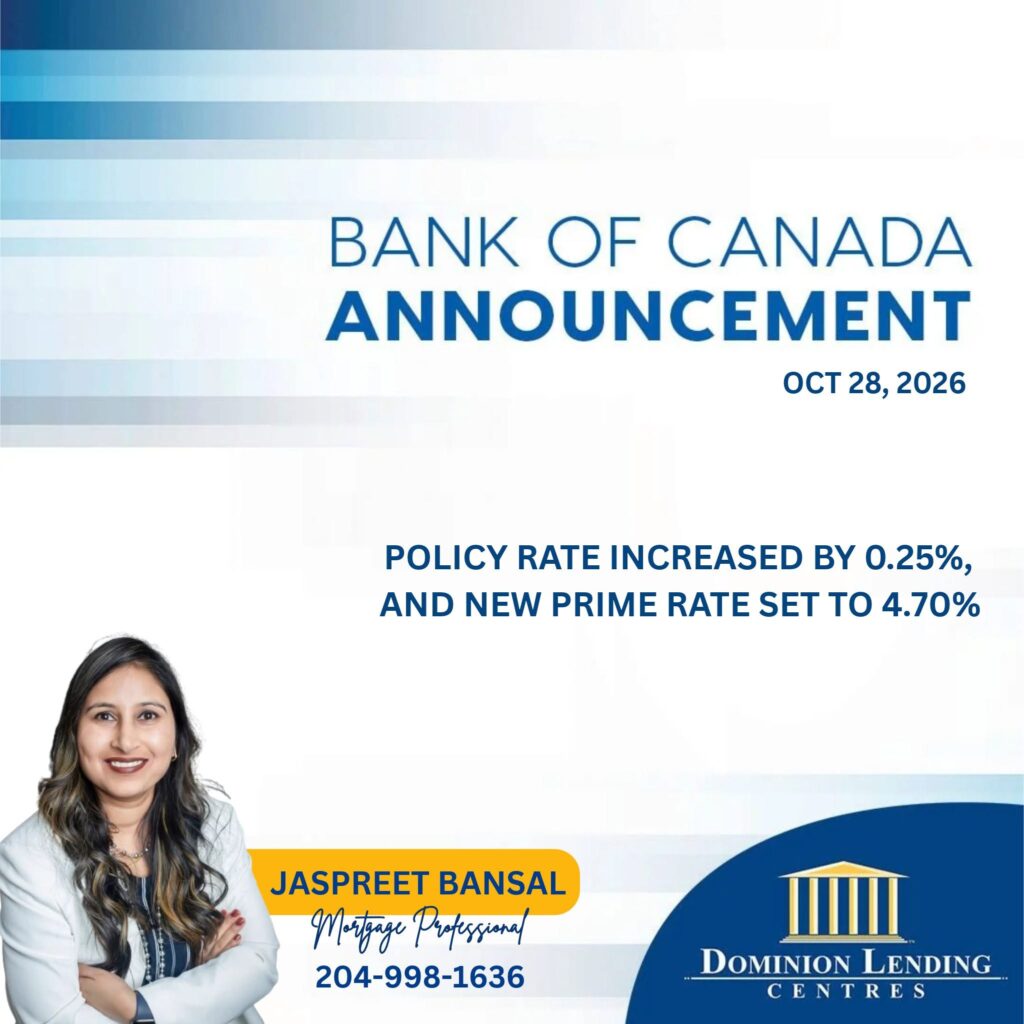
The Bank of Canada has increased its policy interest rate by 0.25 percentage points. Following this announcement, prime is expected to rise from 4.45% to 4.70%, subject to each lender’s confirmation.
If you’re a homeowner, you may be wondering whether your mortgage payment will increase. The answer depends on your mortgage type and lender.
Variable Mortgages with Fixed Payments
If you have a fixed-payment variable mortgage with TD or Manulife Bank, your regular payment will generally remain the same.
However, how your payment is divided will change:
-
More will go toward interest.
-
Less will go toward paying down your mortgage balance.
-
Your estimated amortization—the time needed to pay off your mortgage—will increase.
Although your payment may stay the same today, you’ll make slower progress toward paying off your mortgage.
There are exceptions: If your mortgage reaches its trigger rate or another contractual limit, your lender may require a payment increase or other action. At renewal, your payment may also need to increase to bring your mortgage back in line with its remaining contractual amortization.
These details apply to the specific mortgage product you hold. Other Manulife products may work differently.
Variable Mortgages with Adjustable Payments
If your variable mortgage has adjustable payments, your payment will generally increase when your lender raises its prime rate.
Adjustable-payment products are offered by lenders including Scotiabank, MCAP, Lendwise, MERIX, Home Trust, RFA and Strive.
With this mortgage structure, your payment adjusts to reflect the higher interest rate, helping keep your mortgage on track with its remaining amortization schedule.
Your exact payment amount and the date it changes depend on your mortgage terms and lender’s process. Watch for a notification from your lender confirming the details.
Existing Fixed-Rate Mortgages
If you currently have a fixed-rate mortgage, this announcement does not change your interest rate or regular principal-and-interest payment during your current term.
Your rate remains locked in until the end of that term. If your mortgage is approaching renewal, your next rate and payment will depend on the options available when you renew.
Is Prime the Same as Your Mortgage Rate?
Not necessarily. Your variable mortgage rate is usually calculated using your lender’s prime rate, plus or minus the adjustment outlined in your agreement.
For example, if your mortgage is prime minus 0.90%, a lender prime rate of 4.70% would give you a mortgage rate of 3.80%.
Some lenders, including TD, use a separate mortgage prime rate. Always check the prime rate that applies to your particular mortgage.
What Should You Do Next?
Start by confirming whether your mortgage has a fixed rate, a variable rate with fixed payments, or a variable rate with adjustable payments.
Then review any notice from your lender. If your payment is increasing, update your budget and make sure sufficient funds are available. If your payment stays the same, consider reviewing how the higher interest cost affects your repayment progress.
There’s no need to make a rushed decision. A mortgage review can help you understand your current position and decide whether any changes make sense for your household.
Have Questions About Your Mortgage?
Whether your payment is changing or you simply want clarity, I’m here to help. Let’s review your mortgage, explain what this rate update means for you, and discuss your options.
🙎♀️ Jaspreet Bansal, Mortgage Professional
📱 204.998.1636
📧 info@jaspreetbansal.ca
🌐 www.jaspreetbansal.ca
Rate changes, payment adjustments and effective dates are subject to lender confirmation and your mortgage agreement.